Easy Tech Tuts
How to Connect Binance to TradingView and Trade, Buy, Sell Directly 2026 Easily
By Impran M N
Trading directly from a chart saves the constant tab-switching between an exchange and your charting tool, and TradingView's Binance integration makes that possible for live crypto trades. This guide covers finding the Trading Panel, choosing Binance from TradingView's list of connected brokers, authorizing the connection, and understanding what you're agreeing to before you place a single order. It's built for active traders who want their entries and exits to happen from the same screen as their analysis, without opening Binance separately.
01Start from your live chart
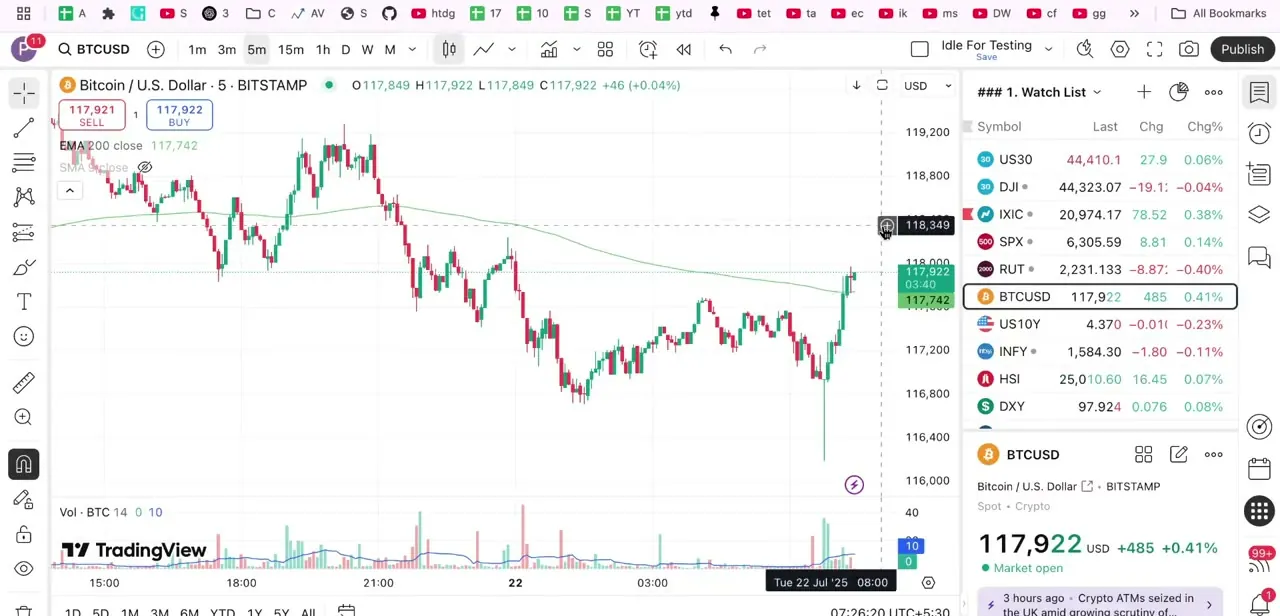
Everything begins on a normal TradingView chart — in this case a BTC/USD chart on the Bitstamp feed with a watchlist of indices and BTCUSD pinned on the right. Nothing about the chart itself changes when you connect a broker; the integration adds a new panel underneath rather than altering how you read candles, moving averages, or volume. Get comfortable on your usual chart setup first, since that's the view you'll be trading from once Binance is linked.
02Open the Trading Panel
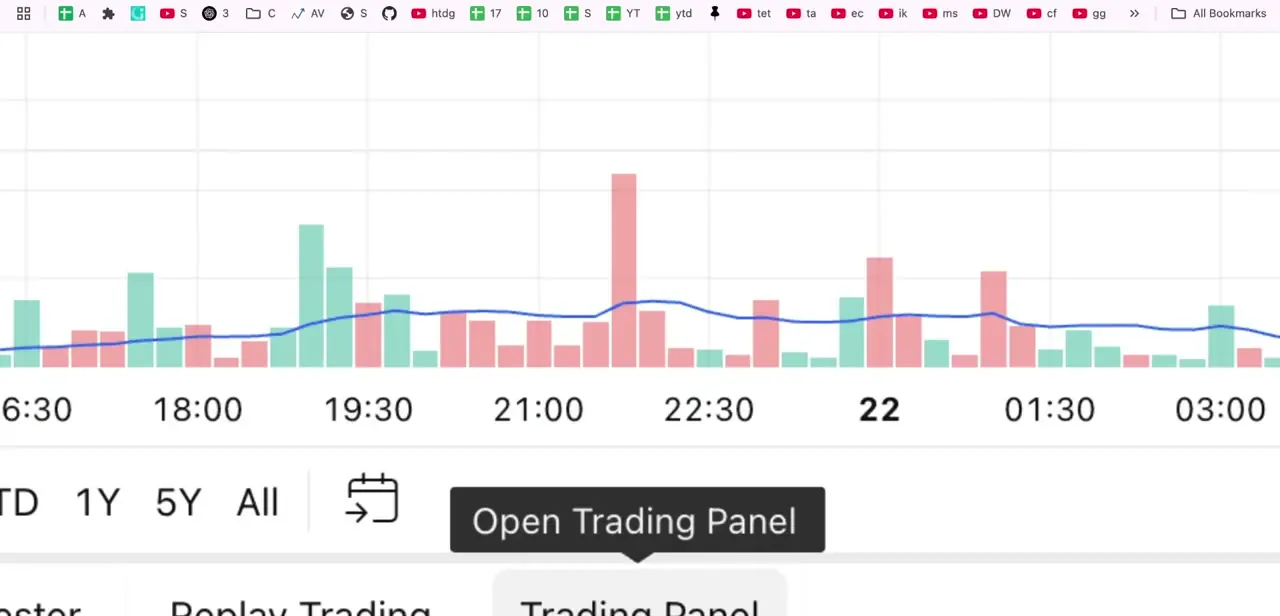
Below the chart, TradingView surfaces an "Open Trading Panel" prompt that expands a dedicated broker section — separate from Pine Editor, Strategy Tester, and Replay Trading, which live in the same row of tabs. This panel is the hub for every connected broker integration, not just Binance, so it's worth knowing it's there even if you later connect a different exchange.
03Choose Binance from the list of brokers
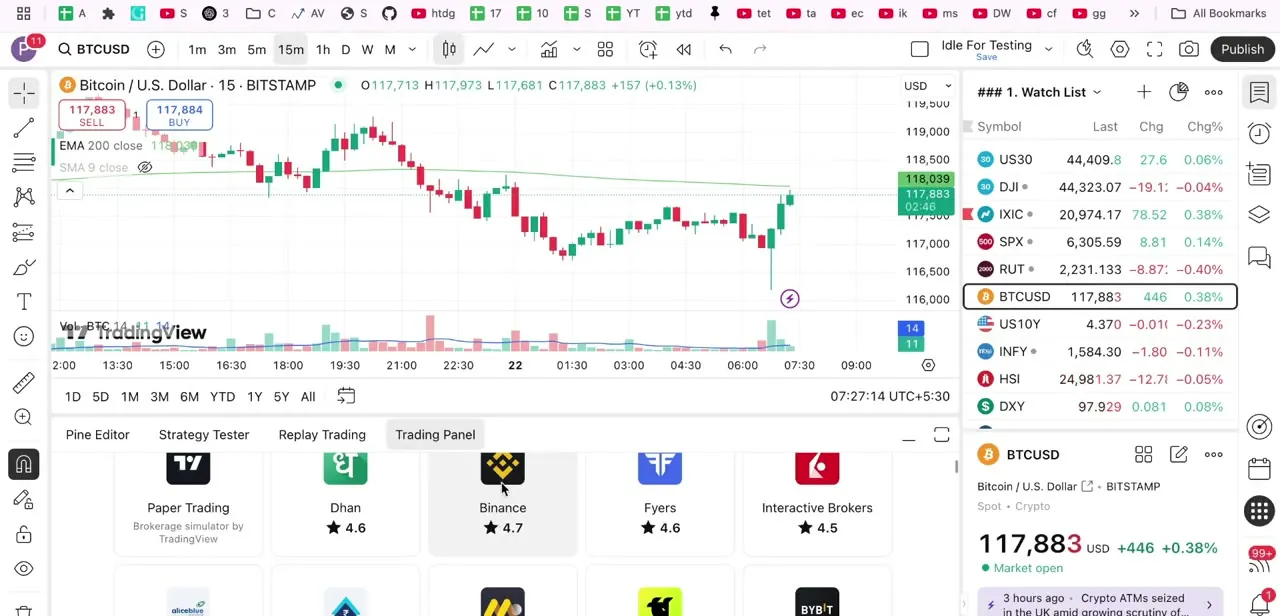
Once the Trading Panel is open, it displays a grid of supported brokers — Paper Trading, Dhan, Binance, Fyers, Interactive Brokers, and others — each with its own rating and logo. Binance sits among the real-money options, distinct from Paper Trading, which is TradingView's own risk-free simulator. Clicking the Binance tile is what starts the authorization flow; nothing connects automatically just from having the panel open.
04Authorize the connection
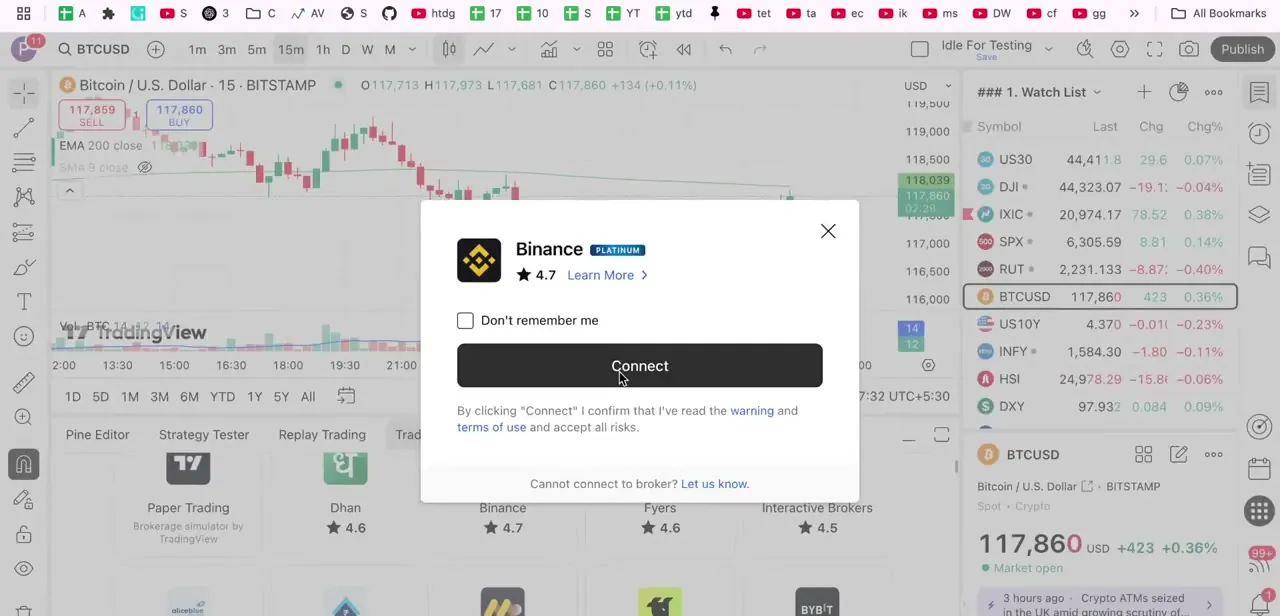
Selecting Binance opens a confirmation dialog showing the Binance logo, its rating, and a single Connect button, along with a "Don't remember me" checkbox for shared or public computers. Clicking Connect confirms you've read TradingView's warning and terms of use and accept the risks of linking a live trading account — this is the actual authorization step, and it hands off to Binance's own login rather than asking for your Binance password inside TradingView itself.
05Place trades directly from the chart
Once authorized, the same trading panel lets you submit market orders, limit orders, and stop orders against your live Binance balance without leaving TradingView. Order tickets pull from the chart's current price by default, so a limit or stop order can be set relative to what you're already looking at, rather than requiring you to re-check the price on Binance separately.
06Monitor positions, balances, and disconnect when needed
With Binance connected, your open positions and account balance appear inside the same panel, so you can track exposure without tabbing away from the chart. If you ever want to stop the integration — a shared device, a change in strategy, or just tidying up connected apps — the panel's broker settings include a disconnect option that revokes TradingView's access without requiring you to change your Binance password.
Frequently asked questions
Is connecting Binance to TradingView free?
The integration itself doesn't require an extra TradingView fee, though your trades are still subject to Binance's standard trading fees.
Can I trade on mobile after connecting Binance to TradingView?
Yes, the integration works across both desktop and mobile versions of TradingView once the Binance connection has been authorized.
Is it safe to connect my Binance account to TradingView?
The connection uses an authorized login and Connect confirmation rather than sharing your Binance password directly inside TradingView, but you should always review the warning and terms of use before granting access to any trading integration.
What do I do if TradingView won't connect to my Binance account?
Re-check that you're completing the authorization through the official Connect prompt, and try disconnecting and reconnecting Binance from the Trading Panel's broker list if the link fails.
Watch the full walkthrough
The same steps, demonstrated on screen from start to finish.